




- Università: Luigi Bocconi
- Docenti:
Laxminarayana Yashaswy Akella
- Studenti:
Ilaria Levanto, Akemi Yatto, Edoardo Malandra, Pietro Bini, Gabriele Carlucci, Matteo Cacciamani
Gruppo Caffeine United
Passport è un progetto di food retail che nasce dalla constatazione che si possa trarre valore dalla trasformazione della pausa caffè in un momento di convivialità prolungato. Gli ideatori del concept notano come un’offerta in cui il caffè è il motore principale, possa inserirsi in un contesto urbano in trasformazione, dove culture diverse convivono ogni giorno. Pertanto, Milano è stata identificata come la location ideale. Questo per via della numerosa popolazione giovane e internazionale, che conta oltre 260.000 residenti stranieri e un numero crescente di studenti che vivono i bar come estensione della propria quotidianità. Tutto questo si inserisce in un contesto in cui, nel mercato horeca, la premiumizzazione sta dimostrando che le persone sono disposte a spendere qualcosa in più per prodotti percepiti come di qualità.
Italia mercato promettente
L’Italia viene identificato come un luogo ricco di opportunità, connotata com’è da una tradizione del caffè molto percepita. Quello della penisola è un mercato in cui sono pochi i locali che trasformano davvero quello del caffè in un’esperienza capace di riflettere il volto multiculturale della città. Passport vuole colmare questo spazio unendo l’eredità del bar italiano a un’identità globale. I designer vogliono realizzare uno spazio accessibile e curato, dove ogni bevanda propone il racconto di una storia e ogni visita possa diventare un piccolo viaggio.
Gen Z target n.1
L’analisi individua nella Gen Z il segmento fruitore principale: sono coloro che frequentano i bar con maggiore frequenza rispetto a ogni altra fascia, sono persone in cerca di autenticità, capaci di apprezza i brand che presentino caratteristiche di inclusività e interagisce volentieri con esperienze digitali e dinamiche. È anche il pubblico con la maggiore e più stabile intenzione di ritorno. Il target secondario è composto da residenti stranieri e studenti internazionali che sceglierebbero Passport, ritrovandovi sapori e tradizioni che evocano casa, trasformando il bar in un punto familiare a Milano. Il target presente in città è stimato in circa 270.000 persone.
Dentro il negozio
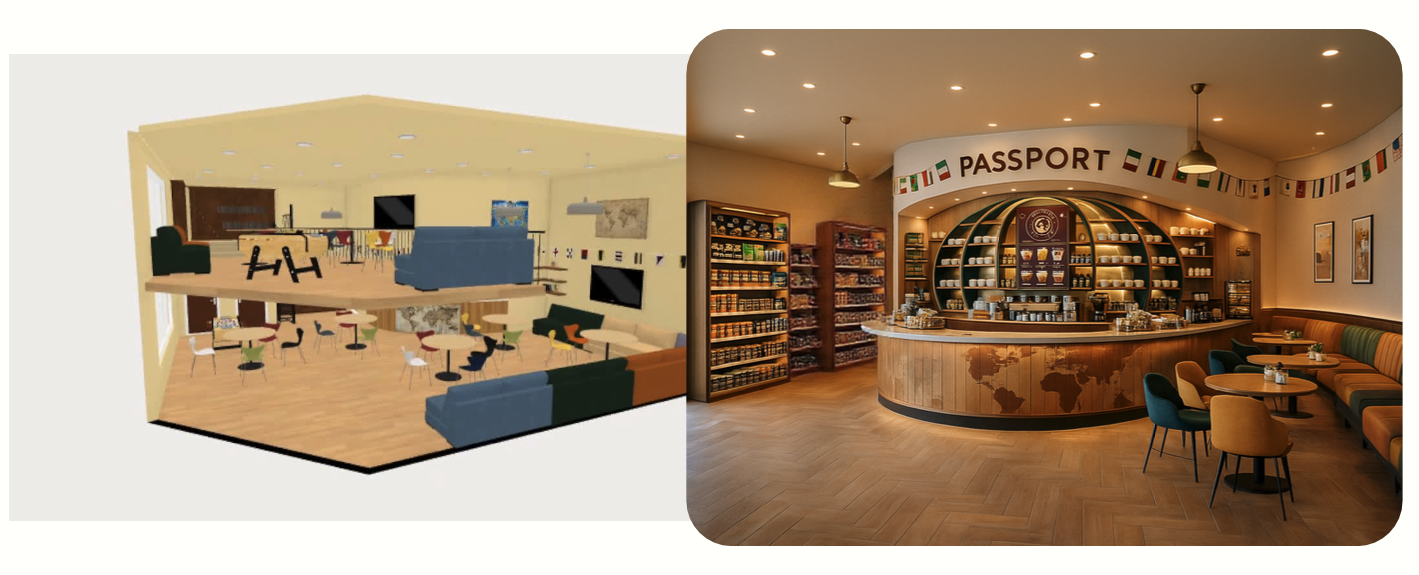
Il concept del punto di vendita rispecchia questa visione. Il primo negozio sarà aperto in Porta Venezia. Si tratta di una superficie di 100 mq, che si troverà in uno dei quartieri più giovani e multiculturali della città. Il layout caratterizzato dal bancone centrale valorizza il rituale della preparazione. Questo convive con un’area studio e una zona relax. Presente anche un piccolo corner pensato per un consumo veloce o il grab-and-go. Il menu propone 14 signature drink ispirati a quattro continenti, serviti in tazze personalizzate e accompagnati da brevi racconti sull’origine. Ricavi aggiuntivi sono previsti grazie al tasting kit, merchandising tematico e workshop pratici che rafforzano la dimensione educativa ed esperienziale.
Capitolo fidelizzazione
La componente digitale è centrale, con la Passport: global rewards app che consente di raccogliere “timbri” digitali tramite qrcode, accedere a livelli progressivi e sbloccare offerte personalizzate ed eventi culturali. Funziona come un sistema crm completo che trasforma il consumo in un percorso coinvolgente e favorisce la fidelizzazione.
La forza di Passport? La debolezza dei competitor
Sul piano competitivo, i business planner identificano un vuoto da colmare. Infatti nessun brand, notano, offre un’esperienza davvero immersiva a un prezzo accessibile. Le catene internazionali sono costose mentre i bar tradizionali italiani garantiscono qualità ma non lavorano sulla dimensione culturale ed emotiva. Gli store etnici parlano a comunità specifiche senza attrarre un pubblico ampio. Passport colma le tre lacune, posizionandosi in uno spazio libero.
La sostenibilità dell'offerta
La sostenibilità è parte integrante del progetto: materiali compostabili, arredi durevoli, programmi di riutilizzo delle tazze e filiera orientata al Fairtrade. Non è solo una scelta etica, ma coerente con il racconto globale del brand e con i valori del target.
Una guida allo sviluppo
La roadmap prevede tre fasi. Quella pilota con lo store di Porta Venezia, tesa a validare il menu, prezzi, app ed esperienza. Una seconda fase di espansione modulare con corner e pop-up in università, spazi di coworking e aree urbane ad alto traffico. Infine un momento di crescita nazionale e internazionale attraverso un possibile modello in franchising.
ENG
Passport was born from the idea that a coffee break can become much more than a moment of pause: it can be a simple way to feel part of a changing city, where different cultures coexist. Milan is the ideal environment for this concept: a young, international population with over 260,000 foreign residents and a growing number of students who treat cafés as extensions of their everyday routines. At the same time, the HoReCa market is solid and expanding, and the trend toward “premiumization” makes it clear that people are willing to pay a bit more for quality and meaning rather than for a basic product.
The opportunity lies exactly here: Italy has a strong coffee tradition, but very few places translate this ritual into an experience that truly reflects the multicultural face of the city. PASSPORT fills this gap by blending Italian café heritage with a global identity, offering a space that is accessible yet curated, where every drink tells a story and every visit feels like a small journey.
Our analysis confirms that Gen Z is the core segment: they visit cafés more than anyone else, look for authenticity, appreciate brands built around inclusion, and interact enthusiastically with digital and gamified experiences. They also show the highest and most stable intention to return. The secondary audience consists of foreign residents and international students: they would choose Passport because it brings back tastes and traditions they’re nostalgic for, making the café feel like a small piece of home in Milan. In conclusion, our Serviceable Obtainable Market amounts to around 270,000 individuals who match our core consumer profile and are most likely to engage with Passport.
The store concept reflects this vision: a 100 m² flagship in Porta Venezia, one of Milan’s most diverse and youth-driven neighborhoods. The layout features a central bar designed to highlight preparation rituals, a study area, a more social relaxation zone, and a small retail corner. The menu includes 14 signature drinks inspired by four continents, served in custom Cultural Cups and supported by short stories about each drink’s origin. Additional revenue streams come from tasting kits, themed merchandise, and hands-on workshops that reinforce the educational and experiential side of the brand.
The digital component is equally important: the Passport: Global Rewards App lets users collect digital “stamps” through QR codes, move through different achievement tiers, and unlock personalized offers and cultural events. It works as a complete CRM system that transforms consumption into an engaging journey and helps us retain customers over time.
Competitively, we identified a clear gap: no existing brand offers a genuinely immersive experience at an accessible price. International chains are expensive; traditional Italian cafés ensure product quality but lack an emotional or cultural dimension; ethnic cafés speak to specific communities but don’t attract a broader audience. PASSPORT positions itself exactly where this empty space is.
Sustainability is treated as an integral part of the brand philosophy: compostable materials, durable store design, reusable cup programs, and a Fairtrade-oriented supply chain. It’s not just an ethical choice, it aligns naturally with our global storytelling and with the values of our target audience.
From a financial perspective, the model is deliberately lean and aims for sustainable growth: with an initial investment of around €190,000, the business reaches stability once annual revenues exceed €346,000, equal to a daily turnover of about €1,000–€1,250, an ambitious but realistic target in a high-traffic area of Milan. The café operates with a contribution margin close to 65%, allowing net profit to grow from approximately €12,000 in the first year to over €30,000 by year three. While net margins start modestly, in the 3–7% range, they improve steadily as the concept matures, customer loyalty rises, and additional revenue streams (events, merchandise, and workshops) begin to play a larger role. In this sense, the break-even threshold is demanding but feasible.
The roadmap is organized into three phases: Pilot phase in Porta Venezia to validate the menu, pricing, app, and overall experience. Modular expansion with corners and pop-ups in universities, coworking spaces, and high-traffic urban locations. Finally, National and international scale-up through a potential franchise model.
In short, Passport aims to be more than a café, it wants to become a place where Milan can recognize what it is becoming: an open, young, global city. A space where people can meet through flavors, explore new cultures, and feel part of a broader community, one cup at a time.




