




- Università: Luigi Bocconi
- Docenti:
Fabrizio Zerbini
- Tutor:
Generoso Branca
- Studenti:
Sara Calì, Isabella Greco, Elisa Maraviglia, Emma Velasquez Mariucci, Alessia Solci
Group 7
E.a.T (Experiment and Taste) Lab è un format ibrido che combina ristorazione, tecnologia e divulgazione, il cui primo punto di vendita sarà sulla Melrose Avenue di Los Angeles. Il concept si rivolge a un pubblico giovane, interessato a scelte alimentari sostenibili e aperto a esperienze immersive e formative. L’offerta ruota intorno a piatti vegani realizzati con stampa 3D, uniti a momenti educativi e interattivi.
La visione che guida E.a.t Lab
L’obiettivo del format è ripensare il significato di “sostenibilità alimentare”, fondendo innovazione tecnologica e cucina a base vegetale. In un contesto in cui il consumo consapevole guadagna terreno, il progetto ambisce a stimolare un cambiamento nei comportamenti e nelle aspettative legate alla ristorazione del futuro.
Il posizionamento di E.a.t Lab nel plant based
Il mercato plant-based, un tempo riservato a nicchie di consumatori, è oggi vicino alla saturazione, con quasi tutte le grandi aziende alimentari che hanno introdotto linee dedicate. In questo scenario competitivo, la differenziazione rappresenta una sfida rilevante.
Parallelamente, il settore della stampa 3D alimentare mostra una crescita significativa, con un tasso annuo composto previsto del 34,2% tra il 2024 e il 2030. La capacità di innovare diventa quindi centrale per rispondere alla domanda crescente di alternative sostenibili.
E.a.T Lab si inserisce in questo spazio con una proposta ibrida, che unisce tecnologia e pratiche alimentari ecologiche. L’assenza di concorrenti diretti rende il modello di business difficilmente paragonabile a format esistenti.
Mangiare ed educare da E.a.t Lab
Nel punto di vendita è presente un laboratorio, che organizza workshop di cucina, dimostrazioni sull’uso della stampa 3D applicata al cibo e incontri con esperti del settore. L’obiettivo è attivare riflessioni condivise sul futuro dell’alimentazione sostenibile.
Target di riferimento di E.a.t Lab
Il pubblico di riferimento è composto da giovani adulti statunitensi appartenenti alla Gen Z, con reddito medio-alto, attenzione alle tematiche ambientali e interesse per la tecnologia. Il format si rivolge a consumatori in cerca di opzioni salutari, ma anche di esperienze culturali collegate al cibo.
Location di E.a.t Lab
La città di Los Angeles viene individuata come contesto ottimale per il lancio, grazie all’alta concentrazione di servizi wellness, ristorazione healthy e realtà attente al benessere. Melrose Avenue, in particolare, si caratterizza per la presenza di una clientela sensibile alla sostenibilità, al design e all’innovazione, in linea con la proposta del Lab.
Il layout
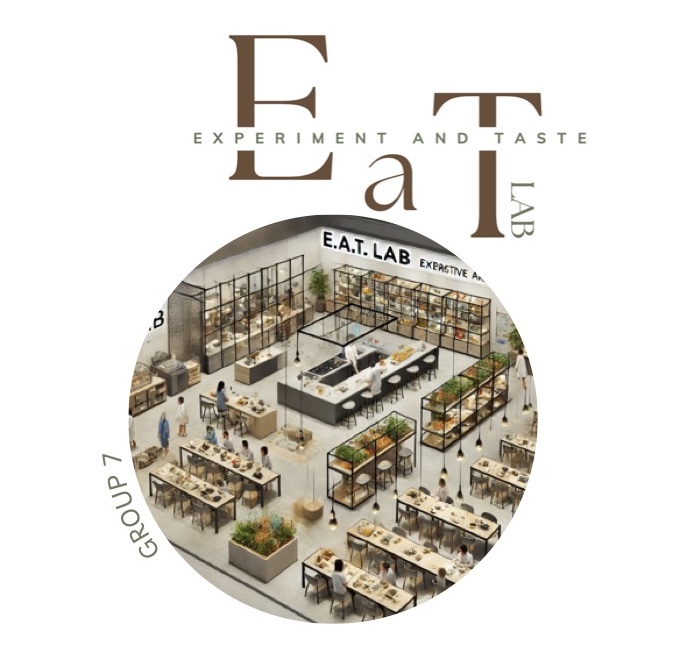
- Caffetteria e spazio eventi: cuore operativo del Lab, funziona come ristorante durante il giorno e si trasforma in location per eventi serali
- Ingresso e food shop: punto di accesso al locale, ospita una zona di vendita con ingredienti, kit per ricette e piatti 3D preconfezionati
- Magazzino: area tecnica destinata allo stoccaggio dei prodotti venduti e alla gestione degli ingredienti freschi
- Servizi igienici gender-neutral
L’ingresso è posizionato frontalmente, mentre l’uscita è collocata nei pressi dell’area casse per facilitare il flusso dei clienti e incentivare eventuali acquisti last-minute. L’uso di pareti in vetro senza cornice garantisce la visibilità tra le aree, isola acusticamente e favorisce l’illuminazione naturale.
Sostenibilità economica per il concept di E.a.t Lab
Le principali fonti di ricavo previste derivano dai servizi di ristorazione, workshop ed eventi (87%) e dalla vendita retail di prodotti alimentari stampati (13%). Il modello si basa su efficienza operativa, con l’impiego di automazioni e un numero contenuto di addetti per contenere i costi. Le previsioni indicano una redditività a partire dal secondo anno. Il finanziamento iniziale è previsto attraverso un mix di investitori privati, prestiti e potenziali fondi pubblici destinati a progetti sostenibili.
ENG
E.a.T Lab redefines the future of food service with a pioneering concept located in the iconic Melrose Avenue in Los Angeles. Designed for the new generations, E.a.T offers immersive, educational dining experiences that champions sustainability through 3D-printed vegan dishes.
Vision
Redefine the meaning of sustainable dining by merging cutting-edge technology and plant-based cuisine. The aim is to inspire a global shift toward conscious consumption and innovation in food service.
Positioning
The plant-based market, once a niche, is now nearing saturation as most major food companies introduce their own lines. This intensifies the challenge of differentiation within the category.
Conversely, the 3D-printed market is growing significantly, with an expected Compound Annual Growth Rate (CAGR) of 34.2% from 2024-2030. Innovation will be therefore the key to answer growing expectations for plant-based alternatives in food.
E.a.T Lab will seize this opportunity by offering a unique hybrid concept where consumers can explore cutting-edge culinary technology and sustainable food practices. Its unparalleled business
model, with no direct competitors, positions it as a leader in this emerging market.
Concept
E.a.T Lab is a hybrid food service & experiential lab whose offer focuses on:
• Experiential Dining: In the cafeteria, customers can taste diverse plant-based, 3D-printed dishes out of the signature menu. The meals are carefully designed to excite the palate and
reflect the company’s commitment to the environment.
• Educational and Community Engagement: Through cooking workshops, 3D-printing food demonstrations, and talks by industry experts, E.a.T Lab becomes a hub for
knowledge-sharing on the future of sustainable food practices.
Target audience
The target audience include American Gen Zs with moderate/high disposable income, eco-conscious, tech-savvy, food enthusiasts, looking for healthy options and seeking educational
experiences.
Location&Layout
Los Angeles stands out as the most promising city for E.a.T Lab, renowned for its emphasis on healthy lifestyles and its abundance of luxury gyms, wellness services, and healthy food options.
Specifically, Melrose Avenue is a prime location, home to an affluent, eco-conscious community whose values align with E.a.T Lab’s ethos and pricing strategy. The avenue’s traffic, driven by
luxury boutiques, provides a steady stream of potential customers for the Lab.E.a.T Lab is thoughtfully designed, incorporating 4 spaces:
• Cafeteria&Events space: The “heart” of the Lab, a multifunctional area serving as a dining space by day and transforming into an immersive event hub by night.
• Entrance Hall & 3D-Printed Food Shop: An area where customers will find ready-to-cook items, ingredient kits, and exclusive recipe cards (including limited editions).
• Storage room: A functional area dedicated to maintaing stock for the shop and supply of fresh ingredients for the Cafeteria.
• Gender-neutral restrooms
The Entrance is located at the front of the Lab, while the Exit is strategically placed near the shop’s check-out counters to optimize visitor flow and encourage last-minute purchases. Frameless glass walls throughout the Lab guarantee visibility, provide high sound insulation, and allow light to fill the space, contributing to a modern and inviting atmosphere.
Financial Viability
EAT Lab's primary revenue streams include dining/workshop/event services (87%) and retail sales (13%), such as pre-packaged 3D-printed food. Our business model relies on operational efficiency, leveraging automation and minimal staff requirements to optimize costs. Forecasts predict profitability by Year 2, supported by a combination of investor funding, business loans, and
potential government grants for sustainable initiatives.




